What makes a rug "contemporary"?
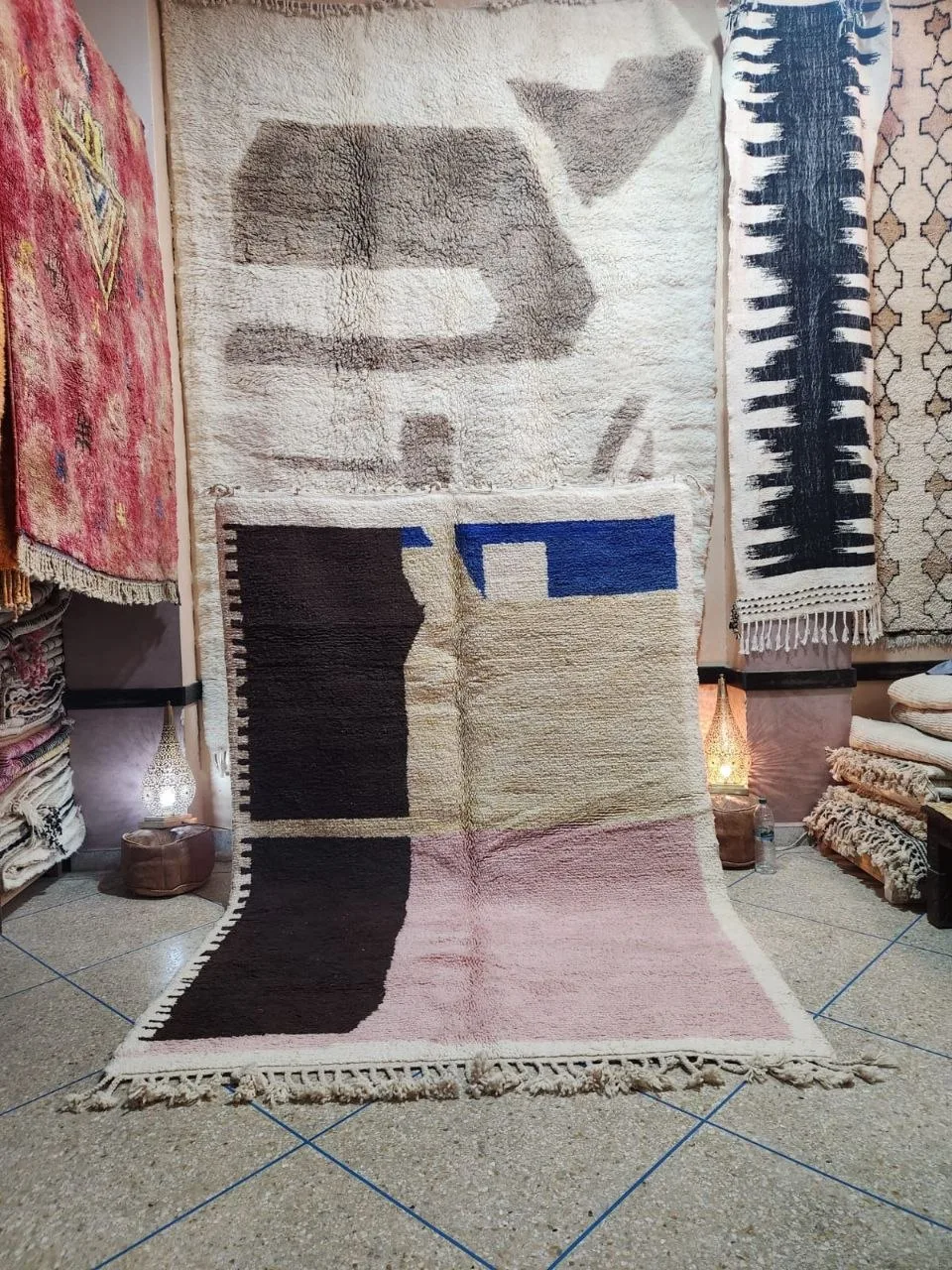
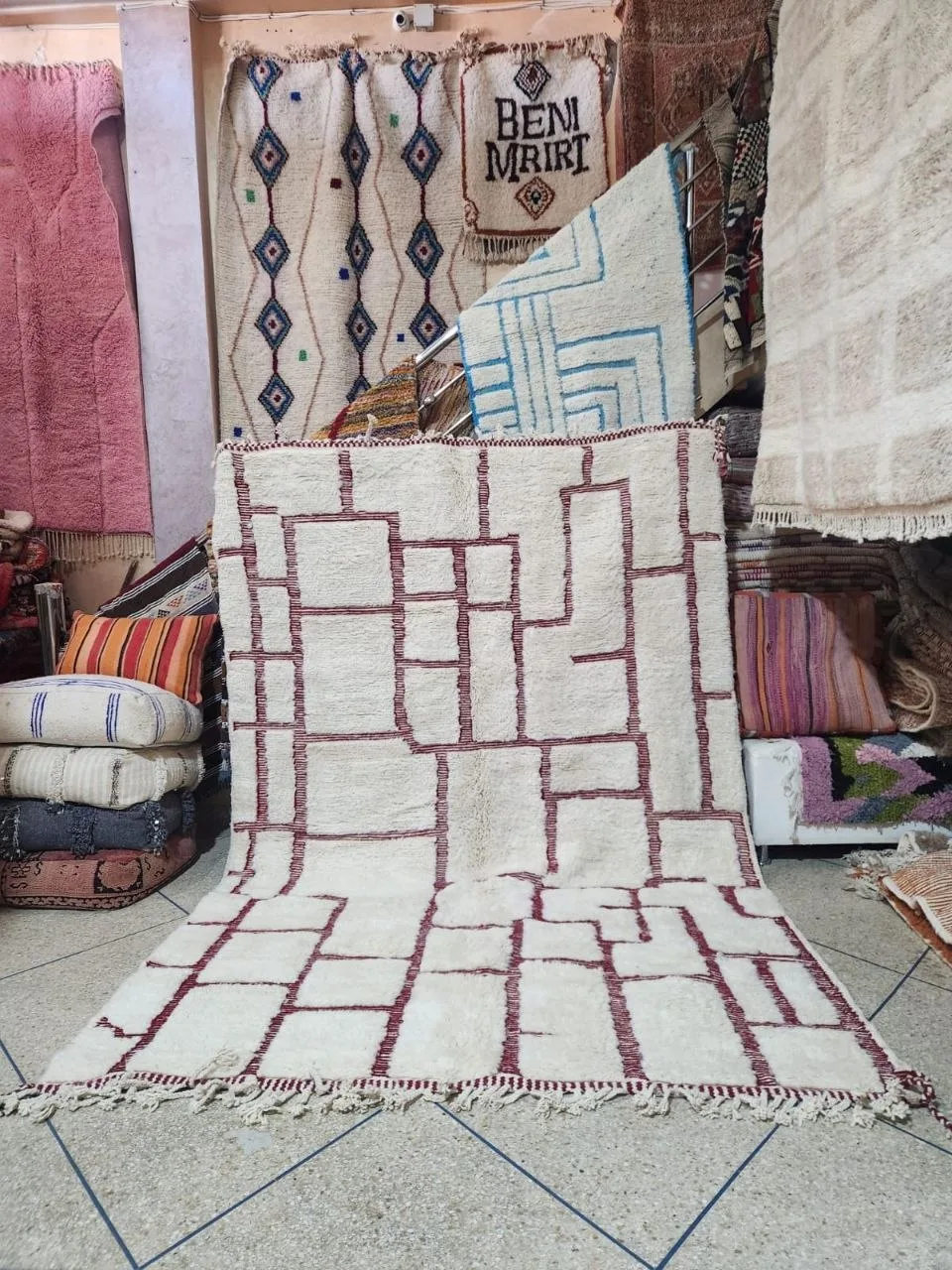
In the context of Moroccan weaving, contemporary refers to the design, not the construction method. A contemporary Moroccan rug is still made by hand, by the same weavers, using the same knotting techniques as a traditional Beni Ourain or Boujaad — wool is still hand-spun and hand-knotted onto a loom, knot by knot, over weeks or months. What changes is the pattern: instead of the tribal diamond grids or color fields passed down through specific weaving communities, contemporary designs draw from modern abstraction — large color-block shapes, asymmetric geometry, minimalist line work, or painterly compositions designed to work with current interior palettes.
This shift began as weavers and small studios in Morocco started responding directly to what international buyers and designers were asking for: pieces that read as art objects and complement neutral, modern interiors, without abandoning the labor and material quality of traditional rug-making.
- Origin: Woven by the same tribal and regional weaving communities as traditional Moroccan rugs, using contemporary designs
- Materials: Hand-spun wool, natural or dyed, matching the quality of traditional pieces
- Technique: Hand-knotted — identical construction method to Beni Ourain, Boujaad and other traditional styles
- Pile height: Varies by piece — often high pile for a plush, modern look
- Pattern: Abstract, asymmetric, color-block — no two identical, but design-led rather than tribal-symbolic
- Time to make: 1–4 months depending on size and pattern complexity
- Lifespan: Decades — construction quality is unchanged from traditional rugs
Why "contemporary" doesn't mean "less authentic"
There's a common assumption that a modern-looking rug must be machine-made, and that authenticity requires an old-looking tribal pattern. That assumption gets it backwards. Authenticity in a hand-knotted rug is about how it's made — the wool, the knotting, the weaver's skill — not about whether the pattern looks centuries old.
In fact, contemporary design has become one of the more demanding categories for weavers, because color-block and asymmetric compositions require precise planning of where each knot changes color, with none of the repeating, memorized structure of a traditional geometric pattern to fall back on. A large, clean color field with a crisp, deliberate edge is, if anything, harder to execute well by hand than a repeating diamond grid.
"The loom doesn't care what century the design belongs to. The skill required is the same either way."
How to buy a genuine hand-knotted contemporary rug
Because "contemporary" is a design category rather than a regional tradition, it's more vulnerable to misrepresentation — a machine-tufted or printed rug can copy a modern color-block design far more easily than it can convincingly fake a hand-knotted tribal pattern. Look for the same fundamentals that apply to any hand-knotted rug.
1. Check the back. A hand-knotted rug shows individual knots on the reverse, visible as a slightly irregular grid of small loops or bumps. A tufted rug (where fiber is punched through a backing fabric rather than knotted) will show a fabric or latex backing instead — this is the single most reliable tell, regardless of how modern or traditional the pattern looks.
2. Ask directly whether it's hand-knotted or tufted. Tufted rugs are a legitimate, faster, cheaper production method, but they are not the same product as a hand-knotted rug and shouldn't be priced or marketed as one. A transparent seller will tell you plainly which one you're buying.
3. Look for hand-spun wool irregularity. As with any hand-knotted rug, genuine wool yarn shows subtle natural variation in thickness. A perfectly uniform, machine-spun look in a rug marketed as hand-knotted is worth questioning.
4. Expect natural color variation within fields. Because contemporary designs use large color blocks, hand-dyed wool will show gentle tonal shifts within a single "solid" color area — this is a feature of hand-dyeing, not a flaw, and it's very difficult to replicate convincingly in a printed or synthetic-dye machine rug.
How to style a contemporary Moroccan rug
Contemporary rugs are, by design, easier to place in modern interiors than some traditional patterns — but a few principles help them read as considered choices rather than generic modern rugs.
Let the rug set the room's accent color. Because contemporary designs are often built from one or two strong colors against a neutral field, they work well as the single source of color in an otherwise neutral room — pull one accent color from the rug into a single other object (art, cushions, a vase) and leave the rest of the palette quiet.
Pair with organic materials. Contemporary Moroccan rugs sit at an interesting intersection — modern design, ancient technique — and that tension reads best against materials that share it: raw wood, linen, stone, unlacquered brass. Pairing with very slick, high-gloss modern furniture can flatten the handmade quality that makes the rug worth having.
Use scale deliberately. Large color-block patterns can visually shrink a small room if the color blocks are too large relative to the space, or feel disjointed if the rug is too small for its own pattern. As a rough guide, choose a rug where the largest color field is no more than roughly a third of the room's shortest wall length.
How to care for a contemporary Moroccan rug
Care is identical to any hand-knotted wool rug, with the same attention to color as a Boujaad piece.
- Vacuum in the direction of the pile, without a beater bar, keeping the fringe clear.
- Rotate every six to twelve months to even out sun exposure, particularly important for saturated color fields.
- Blot spills immediately with cold water and a clean, colorfast cloth.
- Professional hand-wash only, every two to three years — never machine wash.
What should you expect to pay?
Pricing for genuine hand-knotted contemporary rugs tracks closely with other hand-knotted styles of comparable size — the design is modern, but the labor cost is not reduced.
- Small (under 150 × 200 cm): $400 – $900
- Medium (150 × 200 to 200 × 300 cm): $800 – $1,600
- Large (200 × 300 cm and above): $1,400 – $2,800+
Be cautious of contemporary-design rugs priced dramatically below these ranges — a clean, modern color-block pattern is one of the easiest designs to reproduce cheaply via tufting or printing, precisely because it lacks the intricate tribal detail that makes low-cost imitation of traditional patterns harder to pull off convincingly.
Browse Tiziri's contemporary collection — modern designs, hand-knotted by the same weaving communities behind our traditional pieces.
Shop Contemporary RugsThe bottom line
A genuine contemporary Moroccan rug isn't a compromise between old and new — it's proof that the skill behind Moroccan weaving isn't tied to any one pattern. Buy on construction quality first, design second, and you'll end up with a piece that works in your home for exactly the same reason a traditional rug does: because someone spent months making it by hand.
If you'd like help choosing between pieces, contact us — we're happy to advise without any obligation.